


US Drug Test Centers Blog
5-Panel vs. 10-Panel Drug Tests: What's the Difference?
When employers implement a workplace drug testing program, one of the first questions they ask is: Should we use a 5-panel drug test or a 10-panel drug test?
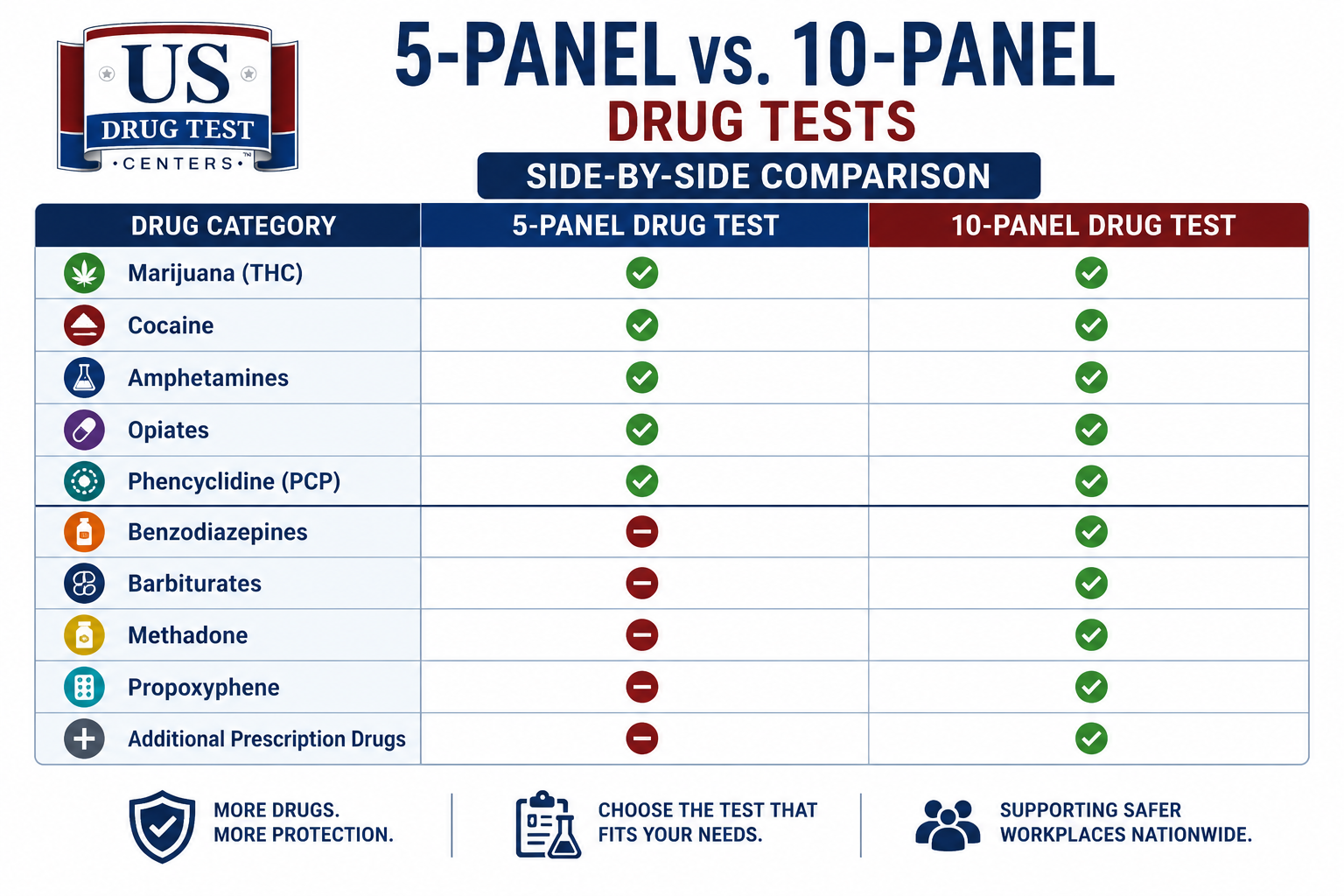
Both tests are widely used across the United States, but they serve different purposes. A 5-panel drug test screens for the five drug classes most commonly associated with workplace testing, while a 10-panel drug test expands the screening to include additional prescription medications and controlled substances that may present safety concerns.
Choosing the right panel depends on your industry, company policy, safety requirements, state laws, and hiring practices.
In this guide, we'll explain the differences between 5-panel and 10-panel drug tests, what each test detects, when employers typically use each one, and how US Drug Test Centers can help you build a compliant drug testing program.
What Is a Drug Panel Test?
A drug panel refers to the number of drug categories included in a screening test.
For example:
- 5-Panel Drug Test = Screens for five drug classes
- 10-Panel Drug Test = Screens for ten drug classes
The higher the panel number, the more substances are included in the screening.
It's important to note that the exact substances included may vary depending on the laboratory, employer policy, or testing program. Employers should always confirm the specific panel with their testing provider.
DOT Drug Testing Is Different
Many employers assume DOT drug testing uses a standard 5-panel test. While this was historically true, DOT testing requirements have changed.
Today, DOT-regulated drug testing follows federal regulations and includes:
- Marijuana (THC)
- Cocaine
- Amphetamines
- Opioids (including several semi-synthetic opioids)
- Phencyclidine (PCP)
The DOT panel is specifically defined by federal regulations and differs from many private employer panels.
If your company is regulated by the:
- FMCSA
- FAA
- FRA
- FTA
- PHMSA
- USCG
You must follow DOT testing requirements rather than selecting a private employer panel.
What Does a 5-Panel Drug Test Screen For?
A standard 5-panel drug test typically screens for:
Marijuana (THC)
Detects marijuana metabolites, including THC. This is one of the most commonly requested drug tests for pre-employment screening.
Cocaine
Screens for cocaine metabolites. Includes crack cocaine and powdered cocaine use.
Amphetamines
Typically includes:
- Amphetamine
- Methamphetamine
- MDMA (depending on panel)
- MDA (depending on panel)
Opiates
Commonly screens for:
- Morphine
- Codeine
- Heroin metabolites
Some expanded testing may include additional opioids.
Phencyclidine (PCP)
Although PCP use is less common today, it remains part of many standard workplace drug testing panels.
What Does a 10-Panel Drug Test Include?
A 10-panel drug test includes all five drugs above plus additional substances commonly associated with prescription misuse or workplace impairment.
These commonly include:
Barbiturates
Examples:
- Phenobarbital
- Butalbital
- Secobarbital
Benzodiazepines
Examples:
- Xanax
- Valium
- Ativan
- Klonopin
Methadone
Often prescribed for pain management or opioid use disorder treatment.
Propoxyphene
Although no longer commonly prescribed, it may still appear on certain expanded panels depending on laboratory configuration.
Methaqualone (or Other Expanded Drugs)
Historically included on some 10-panel tests.
Modern laboratories may instead substitute another drug category depending on current testing standards and employer needs. Employers should verify the exact substances included in their selected test.
Do Both Tests Use the Same Collection Methods?
Yes. Both 5-panel and 10-panel drug tests can be performed using several specimen types.
These include:
Urine Testing
The most commonly requested workplace drug test. Offers a good balance of cost, accuracy, and detection window.
Hair Drug Testing
Provides approximately a 90-day history of drug use. Frequently used for pre-employment and high-risk positions.
Oral Fluid Testing
Detects more recent drug use than urine. Increasingly popular for workplace testing because collections are directly observed.
Blood Testing
Typically reserved for medical or forensic situations. Less common for routine employment testing.
Can Prescription Medications Cause a Positive Result?
Yes. Some legally prescribed medications may trigger positive laboratory findings.
This is one reason Medical Review Officers play an important role in federally regulated and many private employer drug testing programs. The MRO reviews prescription information, when appropriate, before determining the final verified result.
Which Test Do Most Employers Use?
The answer depends on the employer. Many private employers use a 5-panel drug test because it provides an effective screening for commonly abused illicit substances while remaining cost-effective. However, employers in safety-sensitive industries often choose a 10-panel drug test to identify additional prescription medications that may impair employees or create workplace safety risks.
Industries commonly using expanded panels include:
- Construction
- Manufacturing
- Healthcare
- Transportation
- Warehousing
- Aviation
- Energy
- Public safety
What Happens If an Employee Tests Positive?
Professional workplace drug testing programs generally follow several important steps.
An initial screening is performed. If the specimen is non-negative, a confirmation test is conducted using advanced laboratory methods.
A Medical Review Officer (MRO) reviews confirmed laboratory results before a verified positive result is reported to the employer. The MRO provides an opportunity for the donor to discuss legitimate medical explanations, such as prescribed medications, before the result is finalized.
How Often Should Employers Conduct Drug Testing?
Many employers include multiple testing situations in their workplace program.
These may include:
- Pre-employment testing
- Random testing
- Reasonable suspicion testing
- Post-accident testing
- Return-to-duty testing
- Follow-up testing
The appropriate testing program depends on company policy, industry requirements, and applicable federal or state regulations.
Choosing the Right Drug Test for Your Business
Neither test is universally better. The right choice depends on your organization's goals.
A 5-Panel Drug Test May Be Best If:
- You need standard pre-employment testing.
- Employees do not perform safety-sensitive work.
- You want a cost-effective screening program.
- You primarily want to detect commonly abused illicit drugs.
A 10-Panel Drug Test May Be Best If:
- Employees operate machinery.
- Employees drive company vehicles.
- Employees perform safety-sensitive duties.
- You want broader prescription drug detection.
- Your company has increased workplace safety concerns.
Working with an experienced drug testing provider can help ensure your testing program aligns with your operational needs and compliance obligations.
Why Employers Choose US Drug Test Centers
US Drug Test Centers provides professional drug testing services for employers, individuals, schools, government agencies, attorneys, and organizations nationwide.
Our services include:
- 5-panel drug testing
- 10-panel drug testing
- DOT & Non-DOT drug testing
- Hair drug testing
- Oral fluid drug testing
- Instant drug testing
- Laboratory-confirmed drug testing
- Random testing programs
- Consortium and Third-Party Administrator (C/TPA) services
- Nationwide collection site network
Whether you need a single pre-employment drug test or a comprehensive workplace drug testing program, our experienced team can help you select the appropriate testing solution.
At US Drug Test Centers, we help employers nationwide choose the right testing solutions for their workforce. From pre-employment and random drug testing to DOT compliance programs and customized workplace testing policies, our team is here to simplify the process with reliable service, professional collections, and nationwide coverage.
Source: 5-panel-vs-10-panel-drug-tests