





US Drug Test Centers Blog
Marijuana Legalization vs. Workplace Drug Testing: Should Employers Still Screen for THC?
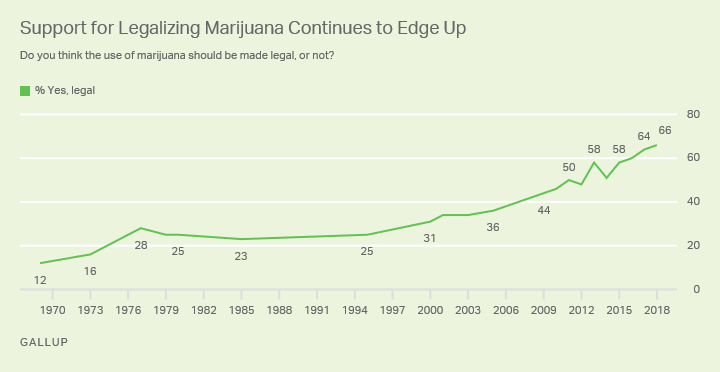
Twenty-four states have legalized marijuana for recreational use. Roughly forty allow it medically. And in April 2026, the federal government moved for the first time in decades. Employers are asking a reasonable question: does it still make sense to screen for THC?
The honest answer is that "should we test for marijuana" is the wrong question. The useful version is narrower: which roles, in which states, at which point in the employment relationship, and for what purpose. That distinction is now the difference between a defensible program and a lawsuit.
What Changed as of 2026 and What Didn't
On April 22, 2026, the Department of Justice issued a final order placing two narrow categories of marijuana into Schedule III of the Controlled Substances Act: FDA-approved drug products containing marijuana, and marijuana produced and dispensed under a qualifying state medical marijuana license. Everything else, including the entire state-licensed recreational market, remains in Schedule I. A broader DEA administrative hearing on rescheduling marijuana generally opened on June 29, 2026, with no final rule expected before late 2026 at the earliest.
The headlines suggested more than the order delivered. For employers, the practical effect so far is close to zero.
The Department of Health and Human Services confirmed in a March 2026 Federal Register notice that federal drug testing panels are unchanged. Marijuana remains on the panel for both urine and oral fluid. The Department of Transportation has been equally direct: a change in a drug's schedule does not, by itself, amend 49 CFR Part 40. For DOT testing requirements to change, DOT would have to conduct its own rulemaking, and none is currently pending.
There is a real legal question underneath all this. The HHS Mandatory Guidelines that govern federal testing are written to authorize screening for Schedule I and Schedule II substances. If marijuana is eventually rescheduled in full, that framework may require a technical amendment to keep marijuana on federal panels. It is worth watching closely. It is not yet a reason to change anything.
The Problem No Legalization Debate Solves
Set the politics aside, because the hardest issue is technical and it doesn't go away regardless of how the law lands.
A standard urine test for marijuana detects carboxy-THC, an inactive metabolite. A positive result establishes that cannabis was consumed at some point. It does not establish when, how much, or whether the person was impaired while working. In regular users, metabolites can remain detectable for days or weeks after any impairing effect has ended.
Compare that to alcohol. Blood alcohol concentration correlates with impairment, thresholds are legally established, and a breathalyzer measures the current state of the person in front of you. Nothing equivalent exists for cannabis. No currently available test reliably measures real-time marijuana impairment.
This is not an argument against testing. It is an argument about what a positive result actually supports, and, increasingly, about what state law will permit an employer to conclude from one.
Where the Decision Isn't Yours to Make
For a substantial share of employers, the question is already settled by someone else.
- DOT-regulated positions. Roughly six million safety-sensitive transportation workers are covered by federal testing rules requiring pre-employment and random marijuana screening. Marijuana is prohibited for these employees on duty and off, in every state, regardless of local law. Nothing in the 2026 rescheduling order changed this.
- Federal contractors and grantees. The Drug-Free Workplace Act of 1988 imposes policy and awareness obligations on federal contractors and grant recipients. Many individual contracts and grant terms go further and require testing outright.
- State certified programs. Several states offer workers' compensation premium discounts to employers who maintain a certified drug-free workplace program. Those programs specify a testing protocol as a condition of the discount.
- Safety-sensitive carve-outs. Nearly every state law protecting off-duty cannabis use contains an exception for safety-sensitive positions, and for situations where compliance would cause the employer to lose federal funding or violate a federal contract.
- Contractual obligations. Insurance policies, customer agreements, and industry accreditation standards frequently mandate testing independent of any legal requirement.
If your organization sits in one of these categories for a given role, the analysis ends there.
Where It's Genuinely Debatable
For everyone else, such as certain non-safety-sensitive roles, there is a real argument on both sides, and it deserves to be stated fairly.
The case for scaling back pre-employment THC screening:
You may be disqualifying otherwise strong candidates for lawful off-duty conduct that has no demonstrated bearing on their job performance. In a competitive labor market, that is a measurable cost. Legal exposure is rising as well. A growing number of states now restrict adverse employment action based solely on off-duty cannabis use or a positive THC result, while continuing to permit discipline for actual on-the-job impairment. California and Connecticut are among them, and several cities have added their own restrictions. And underlying all of it is the technical point above: the test cannot support the inference an employer typically wants to draw from it.
The case for continuing:
Premium discounts, insurance requirements, and customer contracts carry real dollar value. Negligent hiring exposure is meaningful in any role involving vehicles, heavy equipment, patients, children, or controlled substances. categories broader than most employers initially assume. A consistently applied program is easier to defend than a discretionary one. And some employers reasonably conclude that the deterrent value is worth having even with the test's limitations understood.
Neither position is obviously correct across the board. Which is precisely why a single company-wide answer is usually the wrong structure.
Where the Market Is Actually Heading
Three shifts are visible among employers who have thought this through carefully.
- Role-based rather than blanket policies.
Segment your workforce into three groups: DOT-regulated positions, non-DOT safety-sensitive positions, and everyone else. Apply a different standard to each, document the reasoning behind the classification, and apply it consistently within each group. A blanket zero-tolerance policy applied uniformly across a multi-state workforce is now more of a liability than a safeguard.
- Shifting weight from pre-employment to for-cause testing.
Pre-employment THC screening is simultaneously where the legal risk concentrates and where the test tells you the least, it is furthest removed from any workplace event. Reasonable suspicion and post-accident testing are the opposite. A positive result there arrives alongside contemporaneous, documented behavioral observation, which is exactly what state impairment-based statutes require. Moving emphasis from the first to the second improves your legal position and your safety relevance at the same time.
- Specimen type is becoming a strategic choice.
Oral fluid testing has a considerably shorter detection window than urine, which makes it a better proxy for recent use. Though it remains a detection test, not an impairment measurement. DOT authorized oral fluid collection by rule, but the method is not yet operational: HHS must first certify at least two laboratories, and full implementation is not expected before late 2026 at the earliest. For non-DOT programs, oral fluid is available today and is worth evaluating.
Five Questions to Answer Before You Change Anything
- Which of our positions are DOT-regulated, and which are non-DOT safety-sensitive by our own documented definition?
- In which states do our employees actually live and work? Not where we are headquartered.
- Do any of our contracts, insurance policies, or grant terms require testing independent of law?
- Are we currently participating in a state program that ties a premium discount to our testing protocol?
- If we received a positive THC result tomorrow for a non-safety-sensitive employee in a protective state, what would we actually be permitted to do about it , and is our policy written to support that?
That last question is the one that most often reveals a policy written for a legal environment that no longer exists.
The Short Version
Employers should not abandon THC testing, and they should not apply it uniformly to everyone. The defensible middle is a role-based program: full federal compliance where it is required, impairment-based standards backed by documented observation where state law demands it, and a deliberate decision, rather than an inherited default, about pre-employment screening for everyone else.
US Drug Test Centers works with employers across all fifty states on DOT and non-DOT testing programs, drug-free workplace policies, supervisor and DER training, and multi-state policy review. If you are not certain your current policy holds up in every state where you employ people, that is worth finding out before a positive result forces the question.
Call 866-566-0261, email info@usdrugtestcenters.com, or visit usdrugtestcenters.com.
This article is provided for general informational purposes and is not legal advice. Cannabis and employment law is changing rapidly at the federal, state, and local levels. Consult qualified employment counsel before modifying a drug testing policy. Information current as of publication.