


US Drug Test Centers Blog
Kratom and 7-OH: The "Gas Station Opioid" Most Drug Tests Miss
Walk into almost any smoke shop or gas station and you will find small bottles, tablets, and gummies labeled kratom or 7-OH. Many people think of them as a natural energy boost or a pain reliever. Federal health officials now see some of these products as a serious opioid risk. And most standard drug tests do not catch them.
What Is Kratom?
Kratom comes from the leaves of a tree native to Southeast Asia. For a long time it was sold as a powder or capsule. At low doses, people say it works like a stimulant. At higher doses, it acts more like a pain reliever.
The main active compound in kratom leaves is called mitragynine. The leaves also contain a very small amount of a second compound, 7-hydroxymitragynine, or 7-OH.
What Is 7-OH, and Why Is It Different?
7-OH is much stronger than plain kratom. Lab data presented in 2026 described it as binding to the same receptors as morphine, with strength similar to oxycodone.
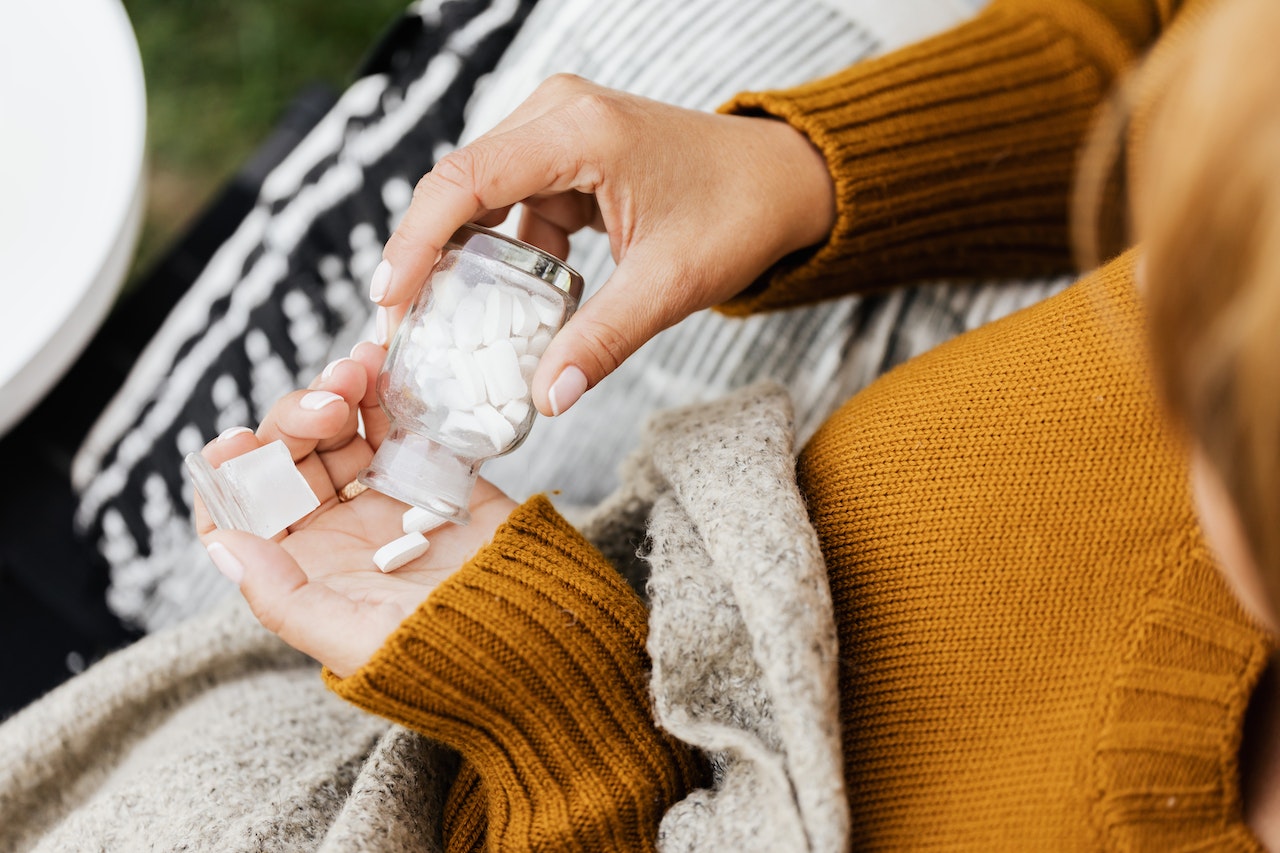
In natural kratom leaf, 7-OH is only present in tiny amounts. Starting around 2024, companies began selling products with 7-OH made or concentrated in a lab. These come as tablets, liquid shots, gummies, and syrups, often in fun flavors. By 2025, the DEA had found more than 300 different 7-OH products for sale online.
That is the concern. A product that looks like candy can carry opioid-level strength.
What Regulators Are Doing
-
In July 2025, federal health officials recommended that 7-OH be placed in Schedule I, the most restricted category.
-
The FDA has warned consumers to avoid concentrated 7-OH products, saying they have not been shown to be safe and may cause serious harm.
-
The 2026 National Drug Control Strategy called out high-7-OH kratom products alongside other dangerous products sold in stores, like hemp THC products.
-
In 2026, the DEA announced plans to temporarily place 7-OH in Schedule I above a set level.
Rules are moving quickly, and some states already ban kratom or 7-OH. Check your state's law.
Does Kratom Show Up On a Drug Test?
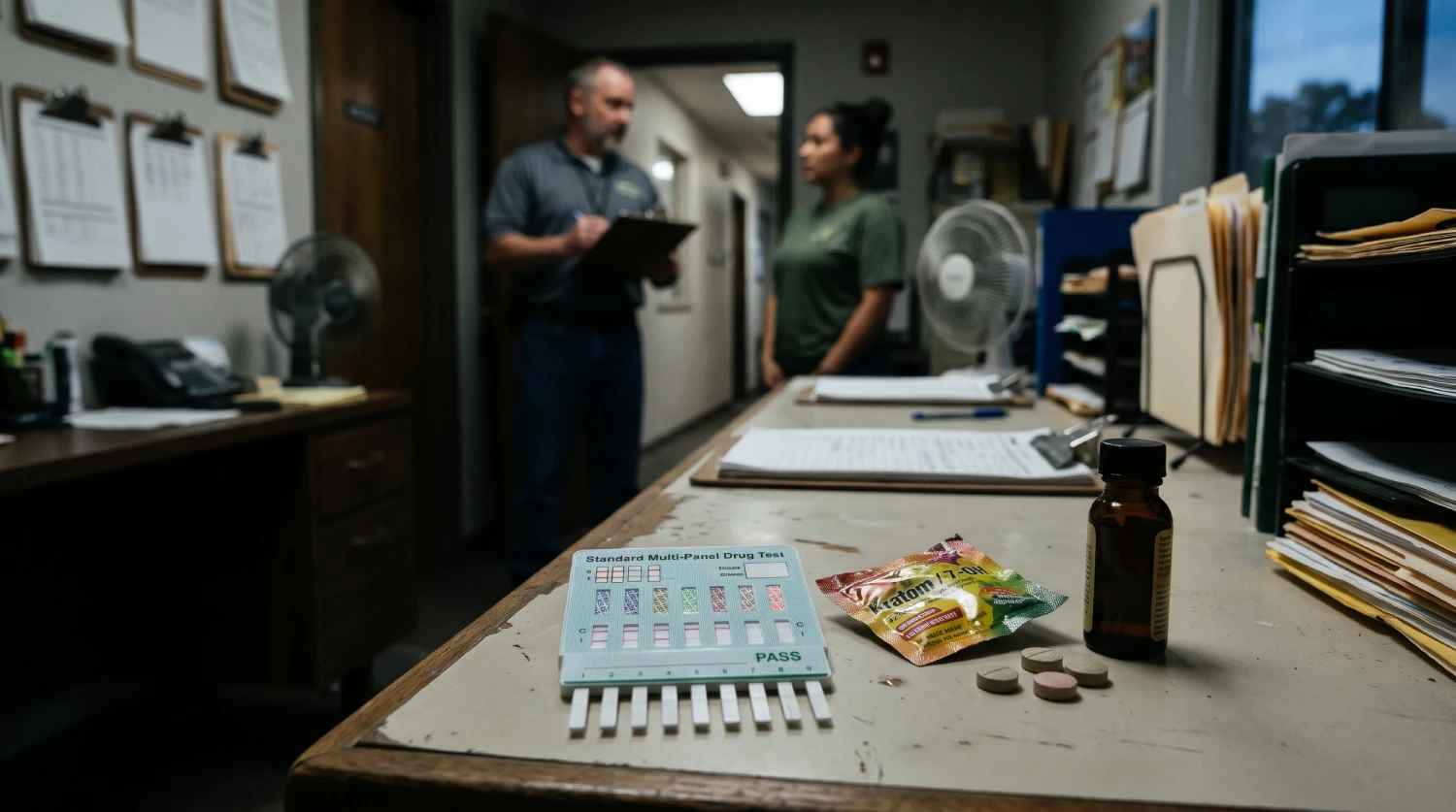
On a standard workplace drug test, usually not.
-
Standard panels do not include it. The federal workplace panels and the DOT panel do not test for kratom, mitragynine, or 7-OH.
-
It does not trigger the opiates screen. Even though 7-OH acts like an opioid, it is a different chemical than the drugs an opiates screen looks for.
-
Special tests exist. Labs can run specific tests for kratom compounds when an employer asks for them.
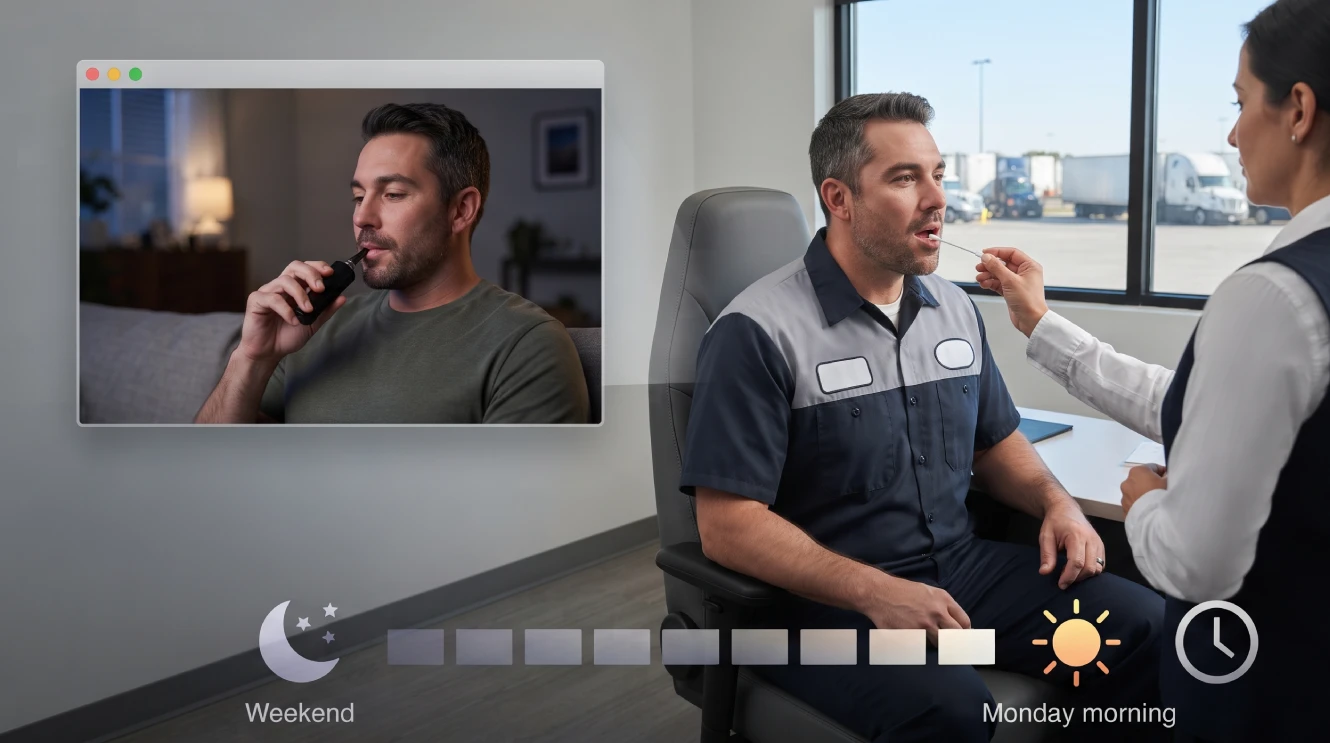
So someone using 7-OH every day may pass a standard workplace test while still being impaired at work.
Why Employers Should Pay Attention
Many people who use 7-OH started with kratom for energy or to manage pain. Some use it to replace prescription opioids. Reports describe people taking large amounts every day, which can lead to dependence and withdrawal.
For a workplace, that can mean:
-
Drowsiness or slowed reaction time in safety-sensitive jobs
-
A team member who seems impaired but passes a standard drug test
-
Overdose risk, especially when mixed with alcohol or other drugs
What Employers Can Do
-
Know what your panel covers. If kratom is a concern in your area or industry, ask whether a specialty test makes sense for your non-DOT program.
-
Update your policy. Make sure your drug-free workplace policy covers products that cause impairment, even if they are sold legally in stores.
-
Train supervisors. Reasonable suspicion training teaches supervisors to document what they see, like slurred speech or nodding off, even when a standard test might not explain it.
-
Talk to your team. Many people have no idea that a "natural" product from a gas station can be as strong as a prescription opioid.
How US Drug Test Centers can help
US Drug Test Centers helps employers build drug-free workplace policies that keep up with new products like kratom and 7-OH. We can review what your current testing covers, train your supervisors on reasonable suspicion, and talk through options for your program.
Call 866-566-0261 or visit www.usdrugtestcenters.com.