




US Drug Test Centers Blog
The High Cost of Non-Compliance: Why Every DOT Employer Must Take Drug and Alcohol Testing Seriously
For employers regulated by the U.S. Department of Transportation (DOT), compliance is far more than checking a box. A strong DOT drug and alcohol testing program helps protect your employees, your business, and the motoring public while ensuring your company meets federal safety requirements.
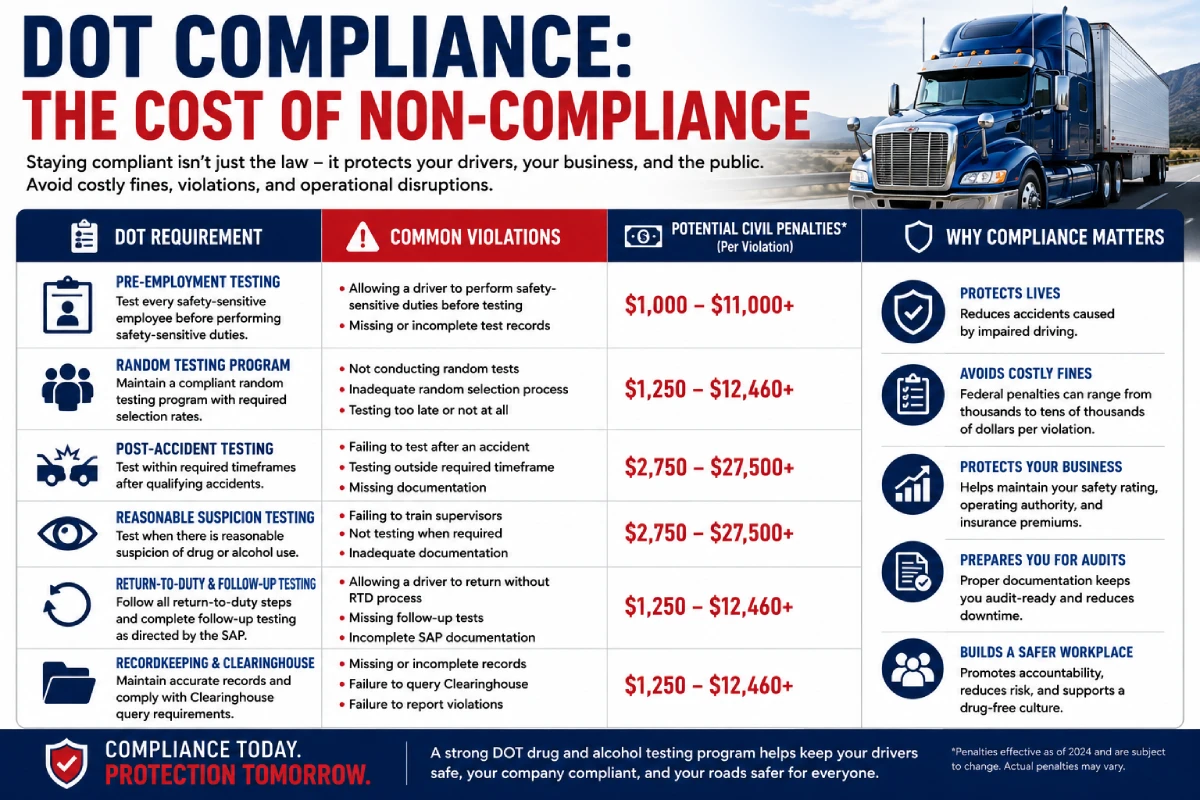
Unfortunately, many employers underestimate how complex DOT compliance can be. Missed random tests, incomplete records, outdated policies, or failure to follow testing procedures can lead to significant civil penalties, failed audits, operational disruptions, and increased liability.
Whether you operate one commercial vehicle or manage a nationwide fleet, maintaining a compliant DOT drug and alcohol testing program should be a top priority.
At US Drug Test Centers, we help employers simplify DOT compliance through nationwide testing services, random testing program management, consortium enrollment, DOT physicals, Clearinghouse support, and comprehensive compliance solutions.
Let's take a closer look at why DOT compliance matters, common mistakes employers make, and the costly consequences of failing to comply.
What Does DOT Compliance Mean?
DOT compliance refers to following the federal regulations that apply to safety-sensitive transportation employees. These regulations are designed to reduce accidents caused by alcohol misuse or illegal drug use while ensuring qualified drivers and transportation professionals safely operate commercial vehicles.
Depending on your industry, regulations may be administered by agencies such as:
- Federal Motor Carrier Safety Administration (FMCSA)
- Federal Aviation Administration (FAA)
- Federal Railroad Administration (FRA)
- Federal Transit Administration (FTA)
- Pipeline and Hazardous Materials Safety Administration (PHMSA)
- United States Coast Guard (USCG)
Each agency follows DOT drug and alcohol testing regulations while maintaining certain industry-specific requirements.
Who Must Comply?
DOT drug and alcohol testing requirements apply to employees who perform safety-sensitive functions over many industries.
Examples include:
- CDL drivers
- Trucking companies
- Bus companies
- Transit agencies
- Aviation personnel
- Railroad employees
- Pipeline operators
- Maritime employees
If your company employs individuals performing safety-sensitive duties, DOT compliance is not optional.
Why DOT Compliance Matters
DOT regulations exist for one primary reason: Safety. Commercial drivers operate vehicles weighing up to 80,000 pounds. Even a momentary lapse in judgment caused by drugs or alcohol can have devastating consequences.
A compliant testing program helps employers:
- Reduce workplace accidents
- Improve public safety
- Protect employees
- Lower liability exposure
- Demonstrate regulatory compliance
- Promote a drug-free workplace
- Protect company reputation
Compliance isn’t about avoiding penalties and fines, it’s about protecting the lives of both drivers and the motoring public.
Required Types of DOT Drug and Alcohol Testing
Federal regulations require several different testing events throughout a driver's employment.
These include:
Pre-Employment Testing
Before performing safety-sensitive duties, drivers must receive a negative DOT drug test.
Random Testing
Random testing helps deter substance misuse by requiring employees to remain eligible for testing at any time during the year. Selections must be scientifically random and completed according to DOT requirements.
Post-Accident Testing
Certain accidents require DOT drug and alcohol testing within specific timeframes. Missing these deadlines may result in compliance violations.
Reasonable Suspicion Testing
When a trained supervisor observes signs of drug or alcohol misuse, testing may be required. Proper supervisor training is essential.
Return-to-Duty Testing
Employees who violate DOT drug and alcohol regulations must complete the return-to-duty process before resuming safety-sensitive work.
Follow-Up Testing
Follow-up testing is directed by a qualified Substance Abuse Professional (SAP) after a driver returns to duty.
Why Random Testing Is So Important
Random drug and alcohol testing is one of the most effective ways to discourage substance misuse in safety-sensitive positions. Employees never know when they may be selected, creating a continuous deterrent.
However, employers must ensure their random program:
- Meets DOT selection rates
- Uses scientifically valid random selections
- Tests selected employees promptly
- Maintains proper documentation
- Follows all regulatory requirements
Managing a random testing program assures that drivers are safely operating within DOT guidelines and compliant.
DOT Audits Are More Common Than Many Employers Realize
FMCSA investigators routinely conduct compliance reviews and audits.
During an audit, investigators may request documentation including:
- Drug & alcohol testing records
- Random testing selections
- Consortium enrollment
- Chain-of-custody forms
- Employer policies
- Supervisor training records
- Clearinghouse queries
- Driver qualification documentation
If documentation cannot be produced quickly, employers may face violations even if testing was performed. Federal civil penalties are adjusted periodically for inflation, and a single violation can result in substantial fines depending on the nature, severity, duration, and number of violations. Organization matters.
The Hidden Costs of Non-Compliance
The financial impact of DOT violations extends well beyond government penalties.
Non-compliance can lead to:
- Lost business opportunities
- Increased insurance premiums
- Legal expenses
- Vehicle downtime
- Driver shortages
- Negative audit findings
- Reputation damage
- Increased administrative costs
For many companies, these indirect costs exceed the regulatory penalties themselves.
Common DOT Compliance Mistakes
Many DOT violations occur because employers misunderstand the regulations or fail to maintain consistent compliance practices.
Common issues include:
- Missing random drug & alcohol tests
- Not enrolling in a compliant random testing program
- Failure to perform pre-employment testing
- Poor recordkeeping
- Failure to query the FMCSA Drug & Alcohol Clearinghouse
- Using incorrect testing procedures
- Inadequate supervisor training
- Failure to remove drivers after violations
- Missing post-accident testing requirements
Fortunately, these mistakes are preventable with the right organization.
The Importance of Accurate Recordkeeping
One of the most overlooked aspects of DOT compliance is documentation. Even if every required test has been completed, inadequate recordkeeping can create compliance problems during an audit.
Employers should maintain organized records of:
- Drug & alcohol test results
- Chain-of-custody forms
- Breath alcohol test forms
- Random selection records
- Supervisor training
- Consortium enrollment
- Policies
- Clearinghouse documentation
Electronic record management can simplify compliance while improving audit readiness.
Stay Compliant, Stay Safe: How US Drug Test Centers Helps Employers Stay Compliant
DOT compliance doesn't have to be overwhelming. US Drug Test Centers offers comprehensive compliance solutions designed to simplify every stage of the process.
Our services include:
- Nationwide DOT drug & alcohol testing
- Employer random testing programs
- FMCSA Drug & Alcohol Clearinghouse support
- DOT physical scheduling
- Supervisor reasonable suspicion training
- Electronic compliance tools
- MVR and CDLIS services
- Driver Qualification File management
Contact US Drug Test Centers today to learn how our nationwide DOT drug and alcohol testing services can help simplify compliance, reduce administrative burdens, and keep your company prepared for whatever comes next.